Happy Monday, everyone! It’s a new week, and we’re going to start it off right. We’re in Week 1 of the NFL’s new season, and I’m happy to say all … Continue reading The Chicago Manual of Style
Happy Monday, everyone! It’s a new week, and we’re going to start it off right. We’re in Week 1 of the NFL’s new season, and I’m happy to say all … Continue reading The Chicago Manual of Style
The Poets and Writers Complete Guide to Being A Writer, the list of the parts of a manuscript located in Chapter 20 made me pause.
Lots of writers and authors and well-educated people like to offer advice on the best way to write a book, create a setting, define your characters, etc. I’m no different: … Continue reading Write For Yourself First
Hello good readers. I’m continuing my writing education by reading books filled with writing tips and advice. Over the weekend I finished Everybody Writes: Your New and Improved Go-To Guide … Continue reading Everybody Writes
I was just going through some of my old drafts the other day, when I came across a binder which contains my drafts for the Lucia and the Saints series. … Continue reading Throwback Thursday: Lucia and the Saints
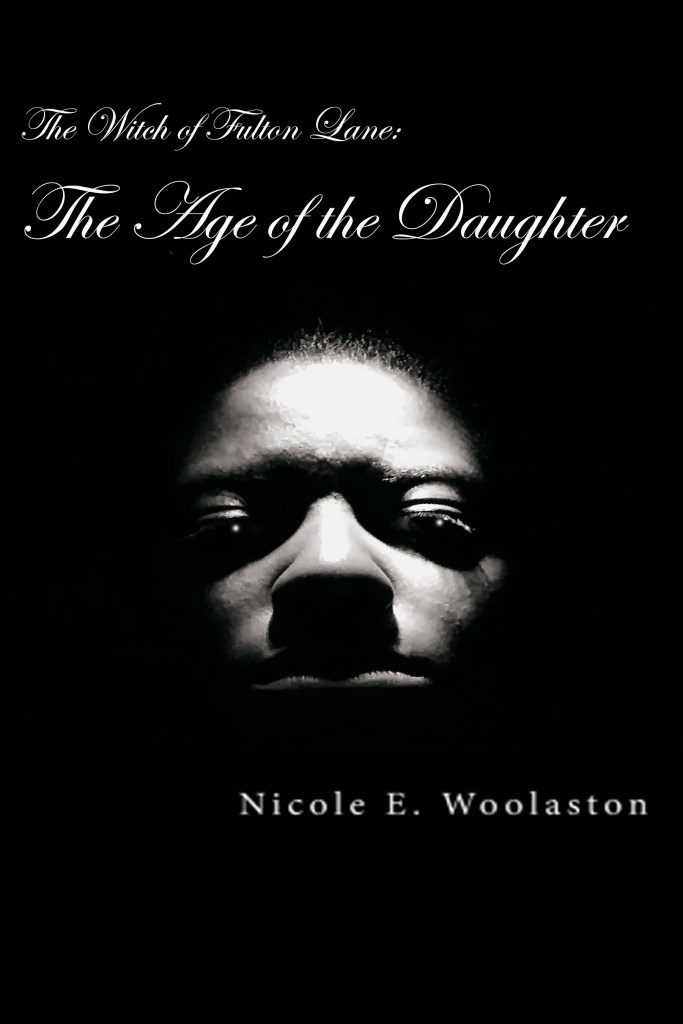
After months and months of writing (and not writing) I am happy to announce the draft for The Age of the Daughter is finally finished! I’m looking forward to spending the weekend editing and revising the whole thing. My goal is to have it ready for publication within the next two weeks. At long last, the sequel to 2017’s The Witch of Fulton Lane is almost complete!
And in other news, I’m getting the hang of WordPress’s new features!
As a self-published author, I don’t have the staff most publishing houses use. Traditional publishers have editors and graphic designers, and people who know how to handle marketing. I am a one woman show: I have to rely on my own editing skills, as well as act as my own graphic designer and do my own marketing. This means, I have to wear several hats. The upside of this, is I am constantly learning new ways to wear all three of those hats.
Lately, I’ve had other writers ask me about publishing their books through Amazon, and how it compares to other self-publishing services I’ve encountered. I often compare Amazon’s service, KDP (Kindle Direct Publishing) to Xlibris, another well-known Print-On-Demand (or POD) publisher. Aside from pricing and creative control, a major difference is the author’s ability to update the content of their book. What does this mean? Let me explain.
Let’s say you’ve written your manuscript, and checked it and rechecked it for errors. You’ve read it so many times you’re literally sick of your own book. You upload it to KDP’s site, follow all of the steps, approve everything, and KDP publishes your book. It becomes available for sale on Amazon. You’re proud, as you should be! You order an “author copy” and read it when it arrives. Then, it happens: you find a typo. After all of that reading and editing and checking, there’s still a bloody typo. You’re thinking to yourself: “Oh, just end me already!” But all is not lost.
YOU CAN STILL UPLOAD NEW CONTENT FOR YOUR BOOK! Yes, if you make corrections to your manuscript, even after your book is published and Amazon has made it “live” on their site, you can still upload a updated version of your book’s content. You’re probably thinking, there must be some sort of time frame in which this has to be done. No, there isn’t. As long as the book is available on Amazon, you can update the content at any time. How do I know? I spotted a mistake in Our Lady of Righteous Rage: Extended and Uncensored, nearly three years after I published it. I made the correction, uploaded the updated manuscript, and all is well.
Now, you’re probably wondering: Publishing with Amazon is free, but will I have to pay a fee when I update my book’s content? No. It’s still free.
Xlibris, on the other hand…
I published the first edition of Valentine with Xlibris in 2010. They sent me an author’s proof copy, so I could check for any errors. The first few mistakes were corrected for free. I was told, if any other changes needed to be made, there would be a fee. And this is after I had spent about $350 on a publishing package. And that was a sale, by the way.
I’m not trying to tell you what to do. You’re your own person, with your own mind; you can decided for yourself. But I hope my personal experiences have offered some insight.
Let me begin by saying, I don’t have a Masters in English Literature or Creative Writing. I have never labeled myself an “expert” when it comes to writing, however, I know the difference between good grammar, and poor grammar. I’m also capable of identifying the misuse of punctuation. I’ve been reading the work of other writers lately–mostly self-published authors like myself—and I’ve come across a few things I feel I need to point out. I’m not going to name any names or books, but if you catch yourself doing any of the things I mention here, you may want to go back and do a bit of editing.
Dialogue
Dialogue should be enclosed with quotation marks, like this: “It’s not a problem,” she said. You shouldn’t use an apostrophe, ex: ‘It’s not a problem’ she said. Also, you shouldn’t use parentheses , ex: (It’s not a problem) she said. And please, don’t use double parentheses, either! Ex: ((It’s not a problem)) she said.
I’m mentioning these, because I actually came across all of these problems in books I have recently read.
There, Their, They’re…
Using the wrong word, or using a word in the wrong tense can be a problem. As a writer, I always keep certain tools handy: a dictionary, a thesaurus, and Google. I have come to appreciate all three, especially the speech function for Google. If I’m not entirely sure how to spell a word, or which tense to use it in, I can always read the sentence out loud, and let Google help me. Plus, I’m still a fan of the old fashioned method of flipping through the pages of a dictionary or thesaurus.
I’m not trying to pick on anyone, but as a writer, the misuse of punctuation and grammar, are two things I take very seriously. I’m a self-published author, so I have to be very mindful of the writing I publish. I don’t have an editor to help me catch my mistakes; I have to do it all on my own. Whenever I read a piece of writing that was self-published, and contains several errors such as the ones mentioned above, it adds to the belief that “self published books are not real books”. There are many people who are against self-publishing, because pretty much ANYONE can publish a book now. The quality of these books can be incredible, but there are books which are seriously lacking the attention to editing every book needs. If you see any of the things I mentioned in your writing, please go back and fix it. If you have allowed someone else to help you edit your work and it still contains these kinds of mistakes, it may be time to look for another editor. 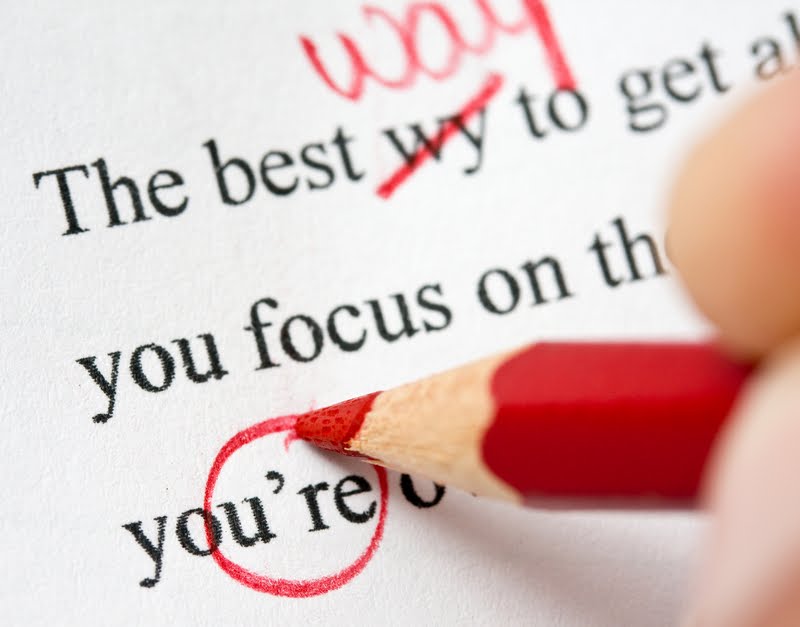
When you’re a writer, you find yourself wearing the hat of an editor, too. For me, editing is the worst stage of writing a book. It’s tedious, and boring, and seems to go on forever, depending on the length of the manuscript. While I was very proud on the day I completed a three hundred page manuscript, I was also annoyed because I knew I’d have to sit down and EDIT all three hundred pages. But, it was a learning experience. If you can afford to have someone else do the editing and proofreading for you, kudos to you. But, if you’re like me, you have to do it yourself. I’m not going to label myself an expert on editing and proofreading, but I would like to share some of the things I’ve learned.
Do all of your proofreading at one time.
I used to print a few chapters, edit them, then type a few more chapters, print them, edit them, and so on. This is a mistake. I did this for Valentine, and Fortune’s Wing, and Allan & Mac. These are much shorter books, however, using this method of proofreading and editing, left a lot of room for errors. I also did this for the original Our Lady of Righteous Rage. I must have read that book five times, and there were still a ton of errors after it was published. So, with Novocaine, I decided to try a different approach. I just spent time writing the entire manuscript, without worrying about proofreading. That took a tremendous amount of pressure off of me, because it allowed me to focus on the story. When the manuscript was complete, I printed it and proofread it, then read it a second time. When I received my author’s proof copy, there was only ONE error, which I corrected.
Don’t rely solely upon Spell-Check
Spell-check is helpful, but you can’t trust it to catch every mistake. Do you know how many times I’ve typed pf instead of of? More than I can count. Then, there’s dialogue. I have a tendency to use gonna instead of going to in my dialogue, and Spell-check gets me every time.
Don’t edit while you’re tired.
I’ve made this mistake. I feel like I’m on a roll, and I don’t want to put the manuscript down. I just want to get it done! But, I have learned to stop if I’m feeling sleepy. Sleepy editing will not benefit your writing. You need to be alert and well-rested.
Do read your writing more than once.
Yes, read it several times, to be sure everything is correct. Will you get sick of your own writing? Possibly. But is it worth it? I think so.
Do print your manuscript out and read the hard copy.
Should you read it on the computer screen or on your tablet? You could, but why would you want to? It’s stressful on the eyes. Reading a hard copy will help you catch more errors.

