No matter how good you think you are at doing something there is always room for improvement and there’s always something new you can learn. Lately I’ve been reading books which share different writing tools and techniques. I recently finished Writing Tools: 50 Essential Strategies for Every Writer by Peter Clark. I’ve read blog posts from other writers who say books on writing are a waste of time and you can’t really learn anything from them. I disagree with that way of thinking.
I believe every book on writing can be useful. You may not be able to use all of the techniques and strategies mentioned in it, but I’m very sure you will find a few things you can use. For instance, when you go to a grocery store you don’t grab a cart and just start dumping everything you see into it. You grab the things you need; you take what’s specific to you. Writing books are no different. You probably won’t agree with all of the information they offer, but you will likely find some things that will be useful to you.
While I most likely won’t use all 50 of Peter Clarks strategies, there were a few I thought were useful. Strategy #23: Tune your voice. Read stories aloud. I think more writers need to spend time doing this. Reading your writing out loud gives you an idea of how it will sound to your reader. It can also help you decide where punctuation needs to be placed: commas make a reader pause and will add more emphasis on a particular part of a sentence. Strategy #29 talks about foreshadowing. I’m big on this. I love foreshadowing. I like giving readers that ah ha! moment when they make a connection between something they read early in the story and something they read towards the end. I also want to mention Strategy #45: Break long projects into parts. I’ve written some of my books out of order. If I have a great middle or ending, but no beginning, I’ll go with whatever I have ideas for and write that part of the story and circle back to the beginning later. I’ll write an entire chapter that has no place in the story yet, and tweak it later.
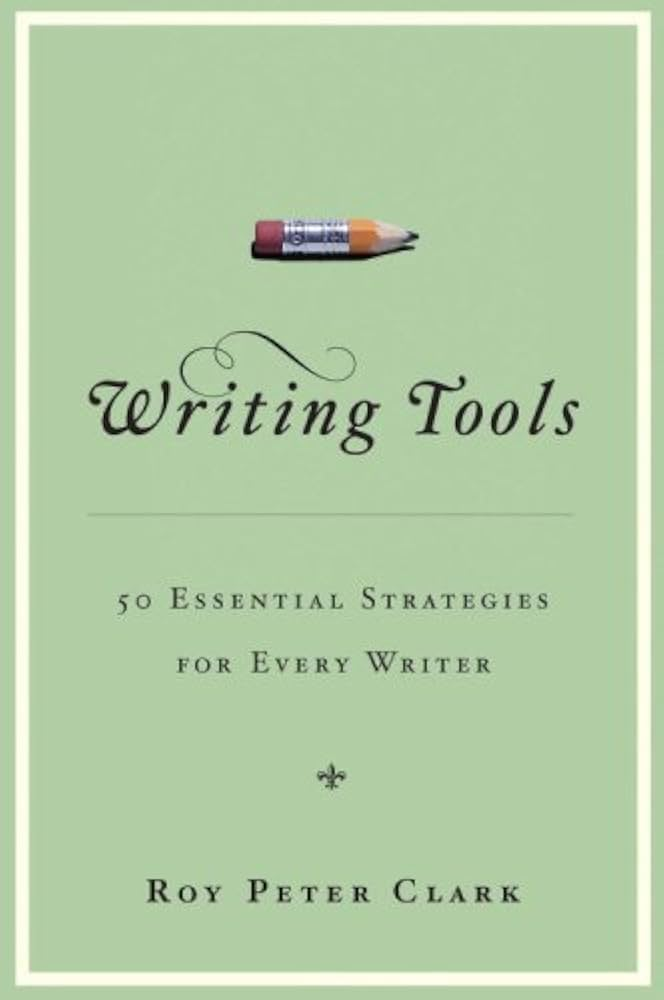
There are some strategies that are new to me and I’m going to work on integrating them into my writing. Strategy #33: Repeat, repeat and repeat. Repetition can add a dramatic effect to a scene or a line of dialogue. Write from different cinematic angles. Turn your notebook into a camera—that’s Strategy #34. I’m a visual person and I tend to ‘watch’ a scene in my head as I write it, but I never thought of treating my notebook or computer like a camera and watching everything from different angles and points of view.
As I mentioned before, you may not use every strategy in Writing Tools but I do think you will find many you can apply to your writing. I’m currently reading Everybody Writes: Your Go-To Guide for Ridiculously Good Content and I’ll post info about it once I’m finished.

