Did you ever ask three different people. who all witnesses a single event, what they saw? Chances are you’re going to end up with three different versions of the “facts”. I see this a lot when I watch Law & Order. Several different people will witness a crime and when the detectives question them, it seems not everyone saw the same thing. He was wearing a blue jacket and he drove off in a black car. Then there’s No, his jacket was black and his car was blue. And finally, You’re both wrong! He wasn’t even wearing a jacket and his car was gray! Sheesh…
Everyone has their own Point of View, and literature is no different. There are different ways in which to tell a story, and you’ll definitely want to choose your narrator wisely. Of the three common POV’s, which are First Person, Second Person and Third Person, I use First and Third. I’ve never bothered with Second because it sounds too much like one of Rod Serling’s openings for The Twilight Zone: “You unlock this door with the key of imagination.” Think of it this way:
First Person: uses “I”: I woke up with a sense of wonder.
Second Person: uses “You”: You wake up and get dressed.
Third Person: uses “He”, “She” or “They”: He woke up and made a cup of coffee.

Generally I use Third Person, because this gives you access to every character’s mind. You can disclose what everyone is thinking and doing. First Person limits you to just one narrator, and unless they happen to be a psychic or a mind reader (your choice), they can only disclose what they as an individual are thinking and doing. Most of my books, such as the Fortune’s Wing and the Valentine series, and The Witch of Fulton Lane and Barrin Heights are written in Third Person. I, the author, am telling the story. I can visit the mind of any character and tell you what they’re experiencing, and I have no limits. The Our Lady of Righteous Rage Companion series is written in First Person, and whoever the book was created for, is the narrator. The regular Our Lady books, on the other hand, are a little different. I wrote them using Stream of Consciousness. Multiple characters tell the story. I know this may sound complicated but it really isn’t, and it’s a fun technique to use once you get the hang of it. This gives you an opportunity to dive into the minds of multiple characters and allow your reader to see different perspectives of a single story. I have William Faulkner’s As I Lay Dying to thank for the inspiration.
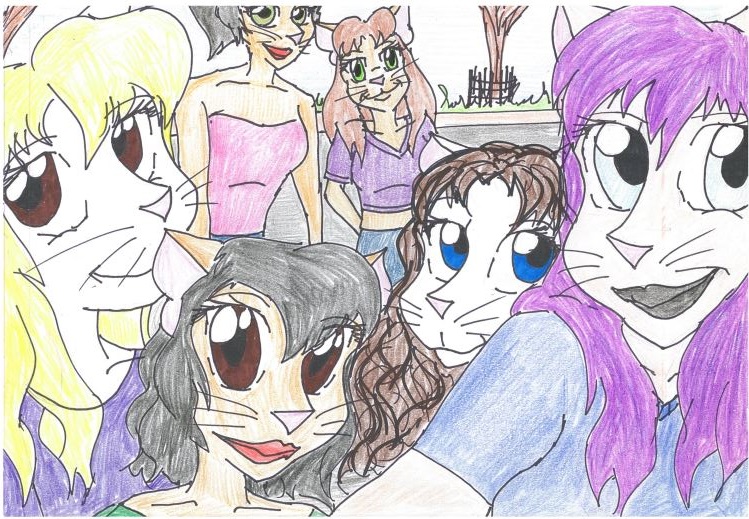
If you’ve only ever used one POV, you may want to experiment with a different one. You can even look back at one of your earlier works and ask yourself, how would the story change if a different character had told the story? What if you throw in a little anthropomorphism and have a character’s dog or cat tell the story? The possibilities are endless.
Keep writing, everyone.
 woolastonentertainment.com