Tag: books

Things I’ve Learned While Working During the Coronavirus

I’m fortunate to still have a job..for now. So, I’m very grateful for that. I have learned a few interesting things while remaining at work during this tragedy, and I’d like to share. I work in a public library. Right now, we’re sanitizing EVERYTHING. The books, CD and DVD cases, shelves, computers, tables, chairs—everything. I’m in charge of sanitizing the fiction books, and let me tell you, there are A LOT OF THEM. But, this humble little activity has helped me discover a few things.


1. Many of the movies I love were based on books. Just Cause, starring Sean Connery and Blair Underwood was based on a book by the same name. Plus, I came across Forest Gump and Rosemary’s Baby. Both books have sequels, to my surprise.

2. I had no idea Amish Fiction was a genre. I have cleaned a ton of Beverly Lewis’s books. 

3. James Patterson basically needs his own private bookshelf in the library. His place in fiction takes up five shelves. 

4. Actors Hugh Laurie and Ethan Hawke have published fiction. Laurie’s book is The Gun Seller, released in 1996, while Hawke’s book is Ash Wednesday, 2002. 

5. Those 1980’s/1990’s Avon romance novels all seem to have similar, awful plots. 

6. Incest is the name of the game in most of V.C. Andrews’ books. 

7. David Lagercrantz continued Stieg Larsson’s Millennium series (The Girl With the Dragon Tattoo, etc).  Because of their last names, their books aren’t too far away from one another on the shelves.

8. After Ian Fleming’s death, 6 other authors inherited James Bond as a character.

9. Spic and Span is good at cleaning the plastic that was used to preserve the covers of the books.

10. My “want to read” list may be getting out of control. 


I’m sure there will be more in the days to come. 


Last Lines and Last Impressions

Some writers feel the first line is the most difficult line to write. Personally, I think it’s the last line. The ending. The finale. Once you get started writing a story, sometimes, the flow is so effortless the story seems to write itself. Then, you reach the conclusion, and everything that has occurred has to be tied up nice and neat with a little bow. Or not. You can do that, too.

How should your story end? With a twist? An explosion? A murder? Should it be happy or sad? Idealistic or realistic? Will the story end with a statement, or a line of dialogue? Some writers will say you should never end with dialogue. My suggestion? Do whatever you feel is best for your story. One of my personal favorite ‘last lines’ comes from F. Scott Fitzgerald’s The Great Gatsby: So we beat on, boats against the current, borne back ceaselessly into the past. 

Here’s a few of my ‘last lines’.

The two of them began to laugh, as the morning continued.

The Witch of Fulton Lane seems to have a happy ending, right? I’m not going to give the ending away here, but this last line comes across as a pleasant one.

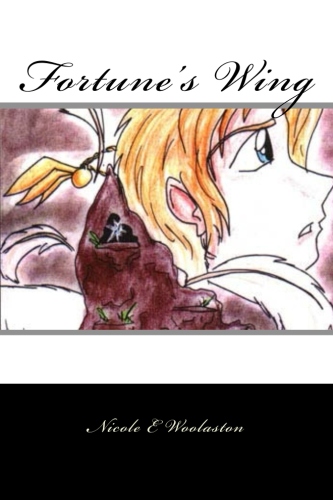
We will be okay.”

It seems fitting that Fortune Oyama, the main character in the Fortune’s Wing series, gets to have the last line in Fortune’s Wing: Flies Again. I’m including this line because it doesn’t indicate how the story ended. This could be a positive ending or a negative one. Maybe he saved the world, and maybe he didn’t. Or, maybe he changed it. The only way to know, is to read the story!

And as Nick and I harmonized the opening verse to Come For the Wake, Stay for the Funeral, I thought, this is our moment; this is our time, and nothing can stop us now…

Yes, it’s long, but it’s a fitting end to a great story (and I’m not just saying that because I wrote it). There are many elements in Our Lady of Righteous Rage. The story deals with a group of friends growing up and starting a band and a business together. They deal with crossing the line between childhood and adulthood, divorce, uncertainty, self-esteem (and a lack of it). The last line is a reflection of a long struggle to achieve a much desired goal. 


As a writer, you don’t want to leave your reader with a disappointing ending. But the ending needs to fit the story. So if it needs to be sad, make it sad. If you want to end with dialogue, do it. Give your story the ending you feel it needs. 

Woolaston Entertainment

First Lines and First Impressions

Ah, the opening line of a book or short story. The attention-getter. It’s the line that sets the tone. It can draw you in, or leave you feeling completely uninterested. Every first line I have ever written, have terrified me. Why? Because I know they will either be good, or awful. I mean, who can top It was the best of times, it was the worst of times? Sheesh.

As a writer, you want your first line to have enough impact so your reader will not only be drawn into the story, but have an idea of what kind of story they’re about to get into. But you don’t want to give away too much. It’s like watching a movie you’ve never seen before, and being able to guess what’s going to happen from the very beginning. It’s not easy to do, but sometimes, you get it right. Below are the first lines of some of my books.


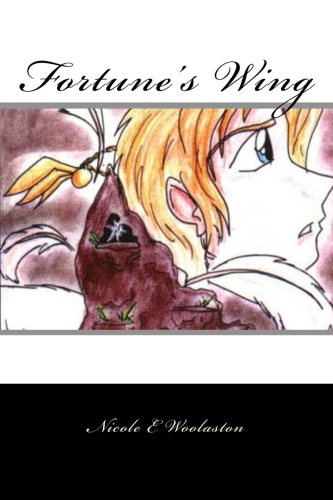
Was it a dream or was it reality?

Fortune’s Wing begins with a reoccurring dream it’s protagonist Fortune Oyama has been haunted by. He has visions of a ruined world; a world he couldn’t save. The heart of the story concerns the fate of the world: will it be destroyed or will it be saved? Will things carry on the way they always have or will there be dramatic changes? All of these questions can only be answered by the one who possesses The Wings. 


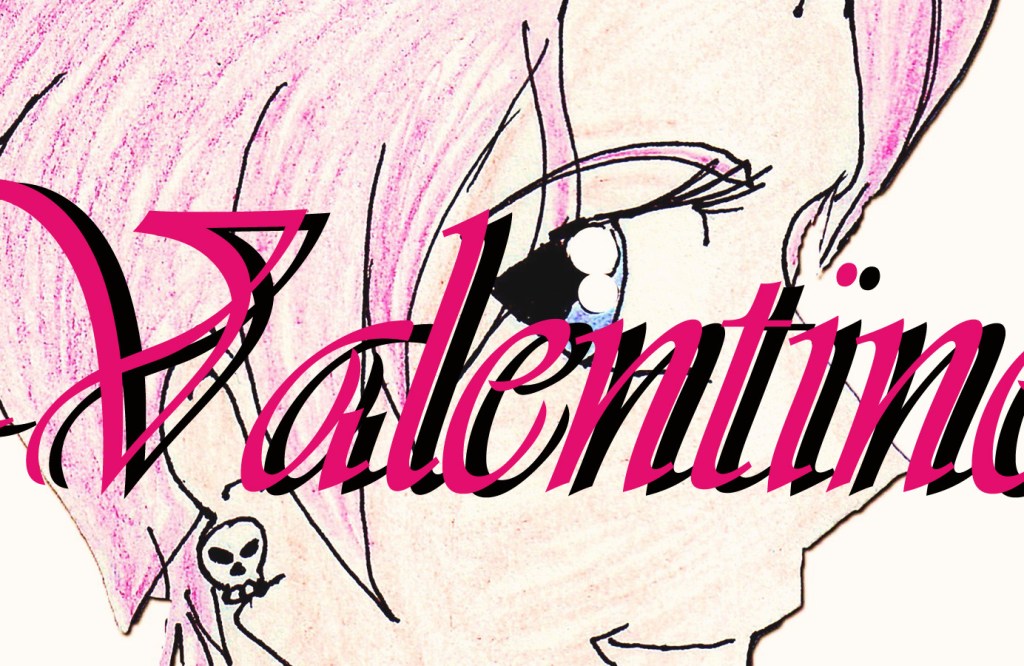
It was early; around six in the morning.

Not my strongest line. But the rest of the paragraph makes up for it: Veronica Entienne watches her cousin Val pack a few last minute items into her bag. This much is clear: she’s going somewhere. And that’s the most important factor in Valentine: Va’s road trip to L.A. to save her father.


When I was twelve years old, I fell in love with rock n roll. 

There are a few things you can take away from the first line in Our Lady of Righteous Rage. One, this is going to be a story with musical elements. Two, it’s a coming-of-age tale (the narrator makes a statement about something that happened when she was twelve, giving the impression she’s older now). Three, music is very important to this person, especially rock n roll. 


“If you take this much, you’ll feel better, but if you take this much, you’ll see God.”

This is the opening line to a book I’m working on, titled Barrin Heights. I’m not one hundred percent sure of where this story is headed, but I can tell you it’s going to be supernatural. 


First lines: as writers, we don’t always nail them. But you can’t expect success every time. You can’t learn from success; you can only learn from failure. 

Woolaston Entertainment

Bildungsroman

Bil·dungs·ro·man
/ˈbildo͝oNGzrōˌmän,ˈbēldo͝oNGks-/
noun
a novel dealing with one person’s formative years or spiritual education.
One of my books was recently added to the catalog at the Hampton Public Library: a copy of Our Lady of Righteous Rage. When I read the list of related subjects and search terms in the description, an interesting word caught my eye. Bildungsroman. Of course, I had to Google it: in literature, this is a genre that focuses on the psychological and moral growth of the protagonist of a story, from youth to adulthood, in which the character undergoes a change.  In other words, a coming-of-age story. I had always thought of OLORR as a sort of coming-of-age story, but I hadn’t given enough thought to the true meaning behind the genre.
The protagonist of OLORR is a cat-girl named Amy. The story follows Amy from her twelfth birthday into adulthood, from middle school to her career in music. She starts out the way most twelve-year-olds do: spirited, a bit naive, and eager to try new things. Friends, music and guitars–that’s her world. As she grows older and matures, she begins to learn there’s more to life than these three things. Sometimes, things don’t go the way we want them to. Sometimes, you meet Prince Charming, and later, he turns into a jerk. A series of life experiences shape Amy into a mature adult; one who can not only have a great career, but be a fantastic wife and mother.  
Bildungsroman is such a wonderful and appropriate term.
If you’re interested in this genre, here are some other titles you may want to check out:
The Catcher in the Rye by J. D.  Salinger
Great Expectations by Charles Dickens

Little Women by Louisa May Alcott


The Perks of Being a Wallflower by  Stephen Chbosky
The Outsiders by S.E. Hinton

Linking Ebooks and Printed Books on Amazon

Whenever I shop for a book on Amazon, one of the things I like to check, is if the book is available as an ebook. There are many titles I will purchase printed copies of, and there are a few titles I purchase only in ebook form. When you search for a title on Amazon, and click on it, you should be able to see all the available formats in one place (ebook, paperback, hardcover). Having to do another search to find other formats can be a bit of a hassle. 

As a writer, I use Amazon’s KDP service to publish my books. This means all of my titles are available on Amazon. When you publish your book with KDP as a printed book, you have the option to make it available as a Kindle book as well, and vice versa. You can also link both formats, so they will appear together, whenever someone searches for that title on Amazon. Every now and then, a mistake happens, and the formats will not be linked to one another. Even if you select “Link Books”, your books may not be linked. Luckily, Amazon can fix this for you, in Author Central.

Author Central (for those who do not know) is Amazon’s site for authors who have books that are available in Amazon’s store. Here, authors can update Amazon’s list of their books, upload a headshot, and include a link to their blog. You can also check sales information for your books and keep up with customer reviews. If you’re having trouble linking your books to one another, here’s what you can do:

First, I recommend deciding which of your books need to be linked, and having the ISBN or ASIN numbers ready. At the very bottom of the Author Central page, click on “Contact Us”. This will take you to another screen.

Under “Select an issue”, select MY BOOKS

Under “Select Details”, select UPDATE INFORMATION ABOUT A BOOK

Next, select UPDATE SOMETHING ELSE

Next, select I WANT TO LINK ONE EDITION OF MY BOOK TO ANOTHER EDITION

Select how you would like to be contacted (email or phone call). I recommend email, because a space will appear, where you can enter the title of your book, along with the ISBN and ASIN numbers that need to be linked together. 

Give Amazon about 24 hours. This is an easy fix, and they will contact you when it is complete. 


It’s All in the Details: A Little Writing Tip

As a writer, I’m always looking for new ways to improve my writing skills and make my writing more interesting. It can be challenging at times, but it’s always worth it. One trick I’ve learned, is replacing basic boring nouns with more exciting nouns. For instance, take this sentence:

The car pulled into the parking lot.

Not much there. The reader may have the image of a car pulling into a parking lot, but let’s say ten different people read that sentence. Ten different people are going to imagine ten different cars. One person may envision a Ford Mustang. Another may see a Chevy Camaro. So, try replacing car with a make and model type:

The Chevy Camaro pulled into the parking lot.

Much more interesting, yes? It’s a minor detail, but it adds more weight to the sentence. We can spice it up even more with a color:

The yellow Chevy Camaro pulled into the parking lot.

Now let’s focus on the parking lot. Is it empty? Full? Is it dark? Let’s go with dark:

The yellow Chevy Camaro pulled into the dark parking lot. 

I’m a visual person, so adding these small details make all the difference to me. Now we can compare the first sentence, with the revision:

The car pulled into the parking lot.

The yellow Chevy Camaro pulled into the dark parking lot. 

It’s all in the details. 

Woolaston Entertainment

Reading Your Book Out Loud

Remember kindergarten, when it was story time and your teacher would read a book out loud to your class? Or perhaps, for some of you, it was first grade. Maybe you had a parent read a book out loud to you. Either way, at some point, you were able to experience having a book read to you. If this never happened during your childhood, well, two things:

1) How sad.

2) Consider the audio book. It can be a wondrous thing.

speaking+out+loud

Reading something out loud can give the text itself a whole new meaning. It’s a combination of the material and the person reading. I mean, I couldn’t sit and just read Miriam Webster’s Dictionary, but I could listen to Tom Hiddleston read it out loud (there’s something about his voice, dude. It’s like ear-porn). Material sounds more interesting when its read out loud. If you’re writing a book, and you’re not sure how it will “sound” to your readers, try reading it out loud to yourself or to someone else.

I was on the fence about Our Lady of Righteous Rage, until I read it to myself, out loud. The material took on a different flow, and I actually came to appreciate it more. The same can be said for Novocaine. In fact, I have posted videos of myself on the Woolaston Entertainment Facebook page, reading samples from some of my books. 

Reading your material out loud can give you a better sense of how the words themselves flow. Maybe your main character’s speech about freedom isn’t as strong as it could be. Maybe that conversation that takes place between the husband and wife sounds a little too crude. Aside from learning how the material will “sound” to your readers, reading out loud is also a great editing tool.

Woolaston Entertainment

Snippet of “Our Lady of Righteous Rage: Extended and Uncensored”